

How To Set Up Keychain On Mac
How To
Mac and iOS Keychain Tutorial: How Apple's iCloud Keychain Works
Posted on November 23rd, 2022 past 
Yous apply passwords to log into websites and services, and since there are and then many of them, it's hard to remember them. It'south a bad idea to use the same password for different websites, because if one site is compromised, hackers will have an email address and password that they can try on other sites. Because of this, you demand to ensure that your passwords are dissimilar for every website and app, and that they are difficult to crack. (An episode of the Intego Mac Podcast talks nigh password strategies.)
Your Macs and iOS devices have a "keychain," which is an encrypted file that stores your logins, passwords, and some other data. This file syncs via iCloud, and so you tin use the same passwords on all your devices. Hither'south how Apple'due south iCloud keychain works.
Accessing Passwords on Mac
There are three ways y'all can admission passwords on your Mac. The Keychain Access app has been effectually on the Mac since the launch of Mac Bone X. It provides admission to your encrypted passwords, every bit well equally other items such equally certificates that ensure the security of websites and services. It stores passwords not just for the Safari web browser, but also for applications that store passwords to access websites or services. When you sign into apps similar Twitter, Slack, or Skype, the passwords you use are stored in your keychain, and yous tin view and edit them in Keychain Access.
Safari allows you lot to access passwords in its Preferences. A Passwords tab lets you lot view and edit passwords for websites you lot can access in the browser; you lot need to enter the countersign of your user account – or utilise Touch ID – to view these passwords. You tin view and edit these passwords, and Safari can flag compromised passwords – user name and countersign combinations that have been found in data breaches – and alert you lot to reused passwords. You tin can also enter codes to prepare two-gene authentication, and when you sign into a website that requires 2FA, Safari can automatically fill the code (run into below to find out how to set 2FA for your logins).
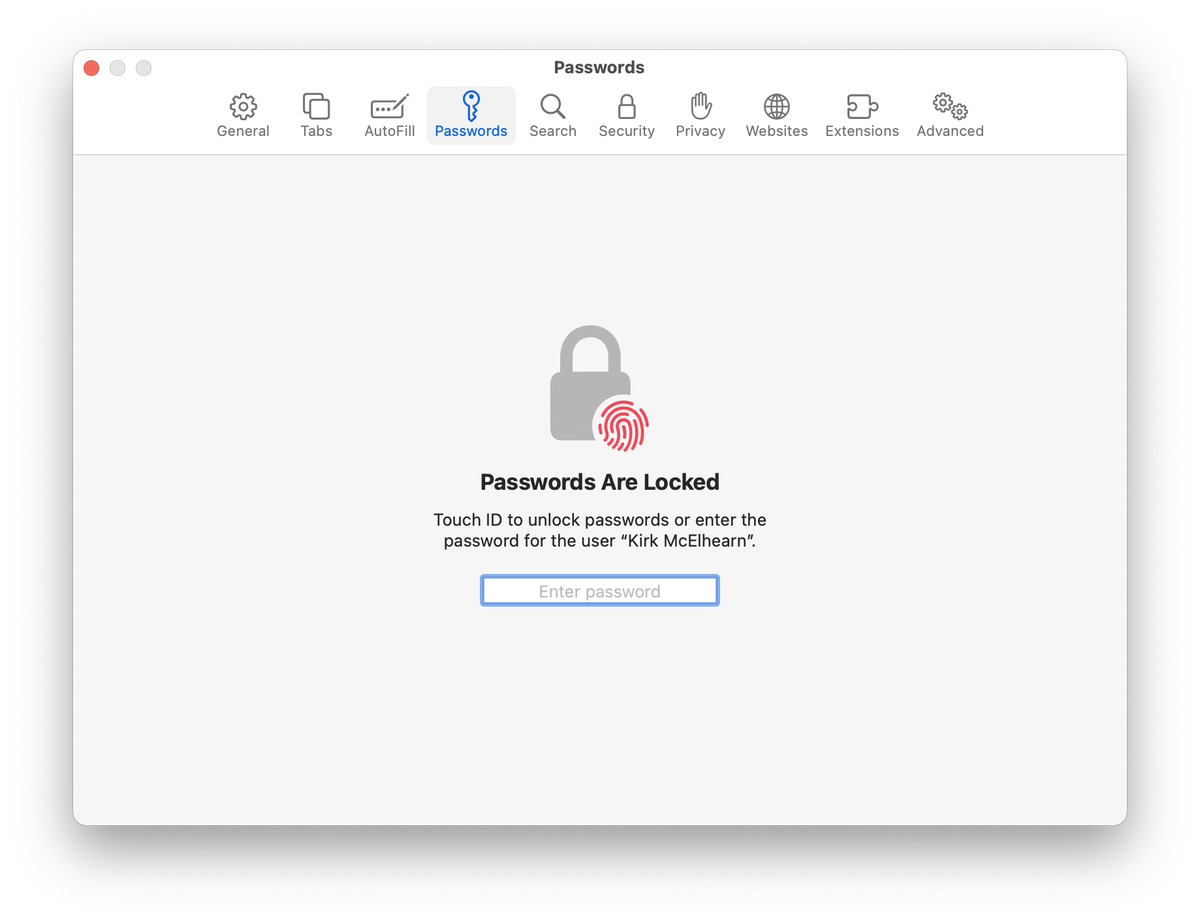
Finally, since macOS Monterey, y'all can also access passwords in the Passwords tab of Organization Preferences. This is essentially the same every bit what y'all see in Safari: you can view and edit passwords, meet compromised and reused passwords, and configure two-factor hallmark for websites. As with Safari, you need to authenticate to access these passwords.
The Keychain Access App on macOS
The Keychain Access app is a graphical user interface for a set of encrypted files on your Mac. When the Safari spider web browser saves a password, or when y'all sign into a service via an app, that password is stored in the keychain, and you can view and edit data in the keychain in Keychain Access.
The Keychain Access app on your Mac lets you manage these passwords and other information, merely you may go for years without ever seeing it. Yous may never need it, in fact, but you tin can use it if you lot need to find a countersign.
The Keychain Access app is located in the Utilities binder in your Applications folder. If y'all launch it, you'll meet a number of items in the sidebar: different keychains, such equally Login, and, if you have the iCloud Keychain agile (see below), y'all'll come across an entry for that. You'll too see Organization, which contains some passwords used past the operating organisation, such as for Wi-Fi networks, and System Roots, which are important certificates that macOS uses.
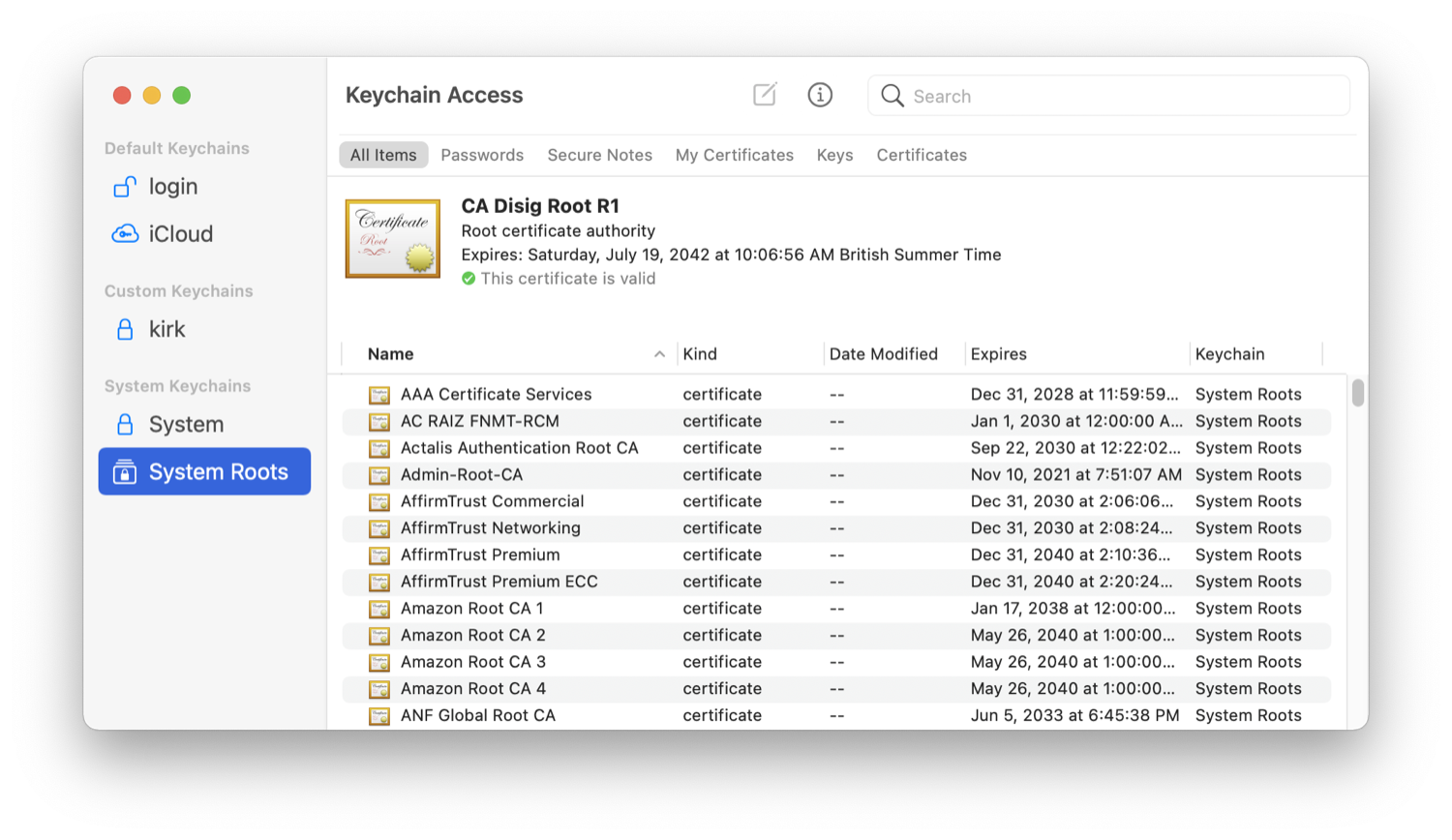
If you click on one of these, such every bit the login keychain, yous'll see a number of tabs at the top of the window: All Items, Passwords, Secure Notes, My Certificates, Keys, and Certificates.
- Passwords include login/countersign combinations for websites and some apps, Wi-Fi passwords, also as credit cards stored by Safari.
- Secure Notes are encrypted files you tin create inside your keychain with sensitive data. This is a great identify to store things similar credit card numbers, bank business relationship information, and more. Withal, you can only access them on your Mac; they don't sync to iOS devices.
- Certificates and Keys are data used to ensure encrypted communication with websites and services. You will probably never need to expect at these.
The main reason to visit the Keychain Access app is if you lot've forgotten a password. Search for it using the Search field, then double-click your outcome to view the countersign. You'll need to authenticate with your user name and password.
Note that while your login keychain is the default, it is unlocked as soon as you log into your Mac. You can increase security past creating a non-login keychain — all this requires is an boosted password when you first up or log into your Mac.
Apple tree'due south iCloud Keychain
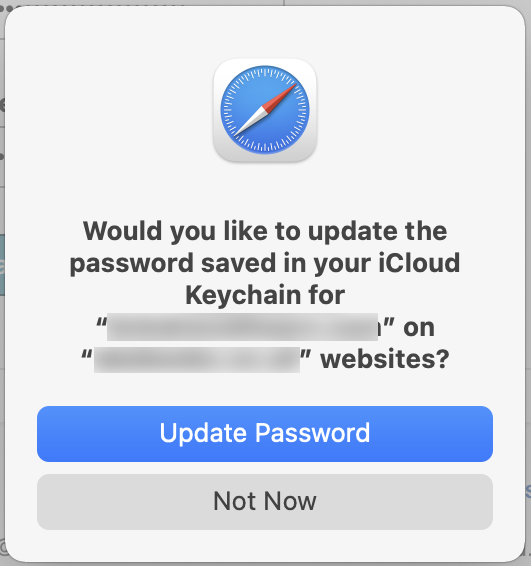
Apple added the iCloud Keychain to enable this data to sync, via iCloud, to all your devices. You actuate this in the iCloud settings on your Mac or iOS device. This syncs all your passwords to the cloud — they are encrypted, then this is secure — so when you log into a new website on your iPhone, for example, you'll exist able to automatically use that login and countersign on your Mac. When you sync the iCloud Keychain, you can admission your website passwords in Safari and in Arrangement Preferences, equally mentioned above.
It'due south piece of cake to employ the iCloud keychain. When yous visit a website and encounter a login form, Safari on the Mac or on iOS, and some apps, will pre-make full the form if it has a password stored for that site or service. In some cases, you may have multiple login/password combinations for a site, and you'll run across options for what's available. And if none of these options are correct, which may happen if a website has changed its domain, for example, click or tap Passwords to search all the saved passwords.
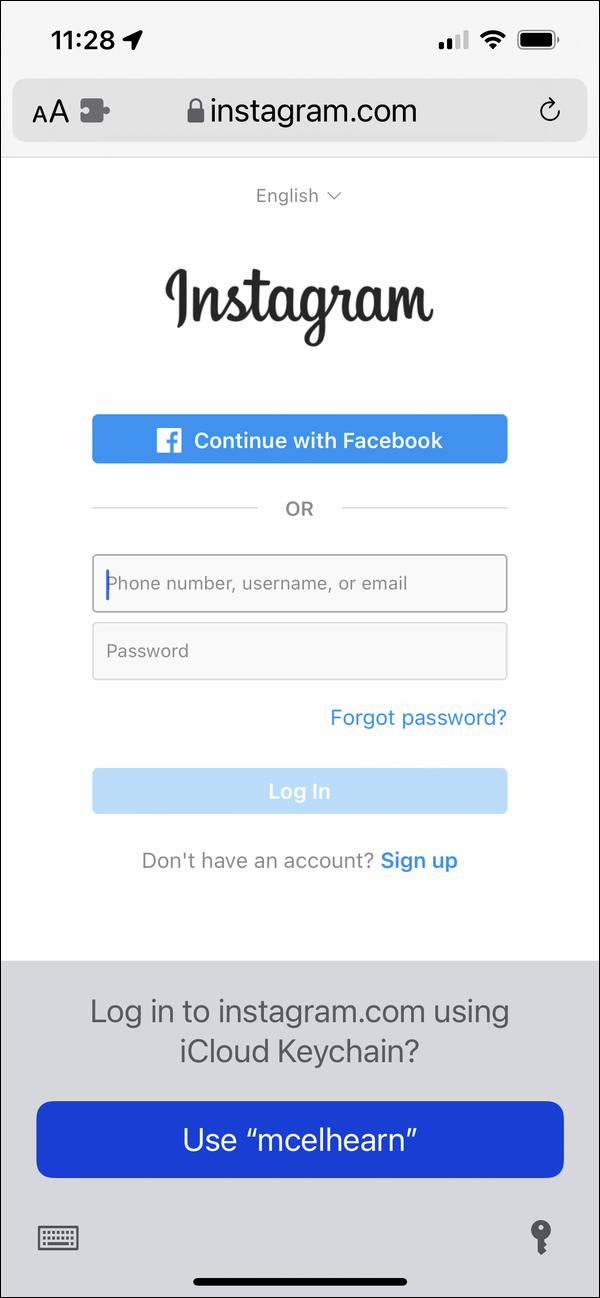
However, you won't be able to view application passwords unless you use Keychain Access on some other Mac that is syncing your iCloud Keychain. This can be a trouble if you sign up for a service in an app, only after want to access the service in a spider web browser; you may observe that you lot have to request a password reset to be able to go on.
Accessing Passwords on iOS
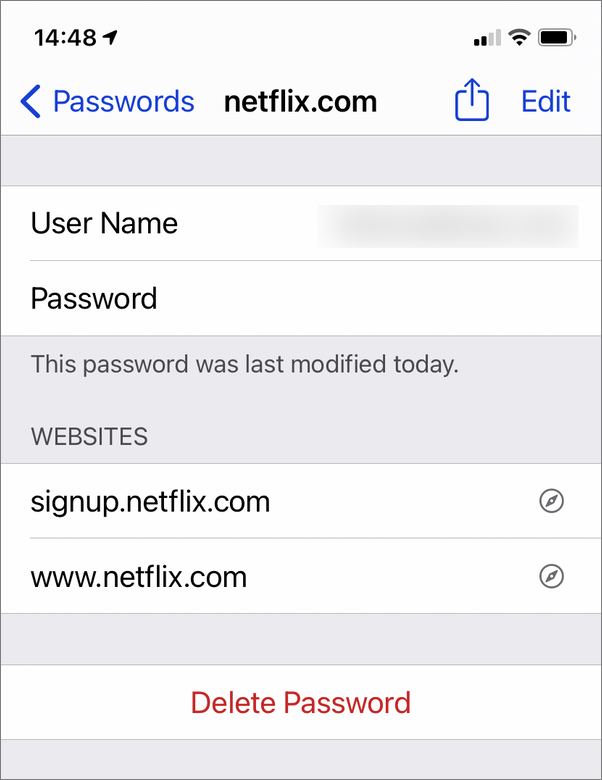
iOS does not have a Keychain Access app; instead, you can view passwords in the Settings app. Go to Settings > Passwords, and y'all'll see a long list of websites. Tap one of them to come across its user name and password. If yous tap either a user name or password, you'll see a popular-upward menu allowing y'all to copy that item, or to AirDrop it to someone else. If you tap the share button at the pinnacle of the screen, you can AirDrop both the user name and password to a friend or family member. This is useful if yous've changed your Netflix password, for example, or for websites where you share login credentials.
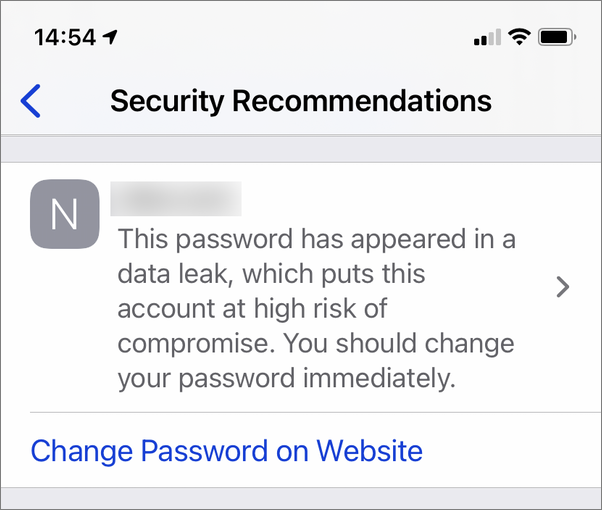
The Passwords settings on iOS includes a security feature that can assistance ensure that your passwords are secure. In Security Recommendations, yous may see an alert if you lot're using the same password on multiple websites, or if your user proper name, e-mail, and password were constitute in a data breach. Tap information technology to see a listing of logins you should change; tap Change Countersign on Website to get to the website in question to update the password.
On macOS, you can run into a similar feature in Safari, and in the Passwords pane of System Preferences. At the top of the passwords list, you lot'll see Security Recommendations. If you click any login in this department, Safari shows passwords that are reused or "hands guessed," and you tin can click a link to modify them.
Setting Up 2-Factor Authentication on Mac or iOS
Two-factor authentication or 2FA is a way to protect your accounts; in addition to having to enter your user name and password, y'all accept to besides enter a 1-fourth dimension code that is generally valid for a short period of time to admission a website or service. You should utilise two-factor authentication whenever possible, and, until the release of macOS Monterey and iOS 15, you couldn't exercise this with Apple's password direction tool.
Related:
2-Cistron Authentication: How Information technology Works and Why You Should Use It
Many services provide 2FA codes, likewise known equally 1-time passwords or OTP, via text message, and sometimes by email, but these methods of transmitting codes isn't secure. Also, in that location may be times when you cannot access text messages or emails. The safest mode to piece of work with 2FA is to use your device to generate codes.
To set up 2FA for a login, find the website or service in your passwords – this works in all the password interfaces shown in a higher place for your iCloud Keychain, with the exception of the Keychain Access app – then click Edit. You'll meet a dialog like this on Mac:
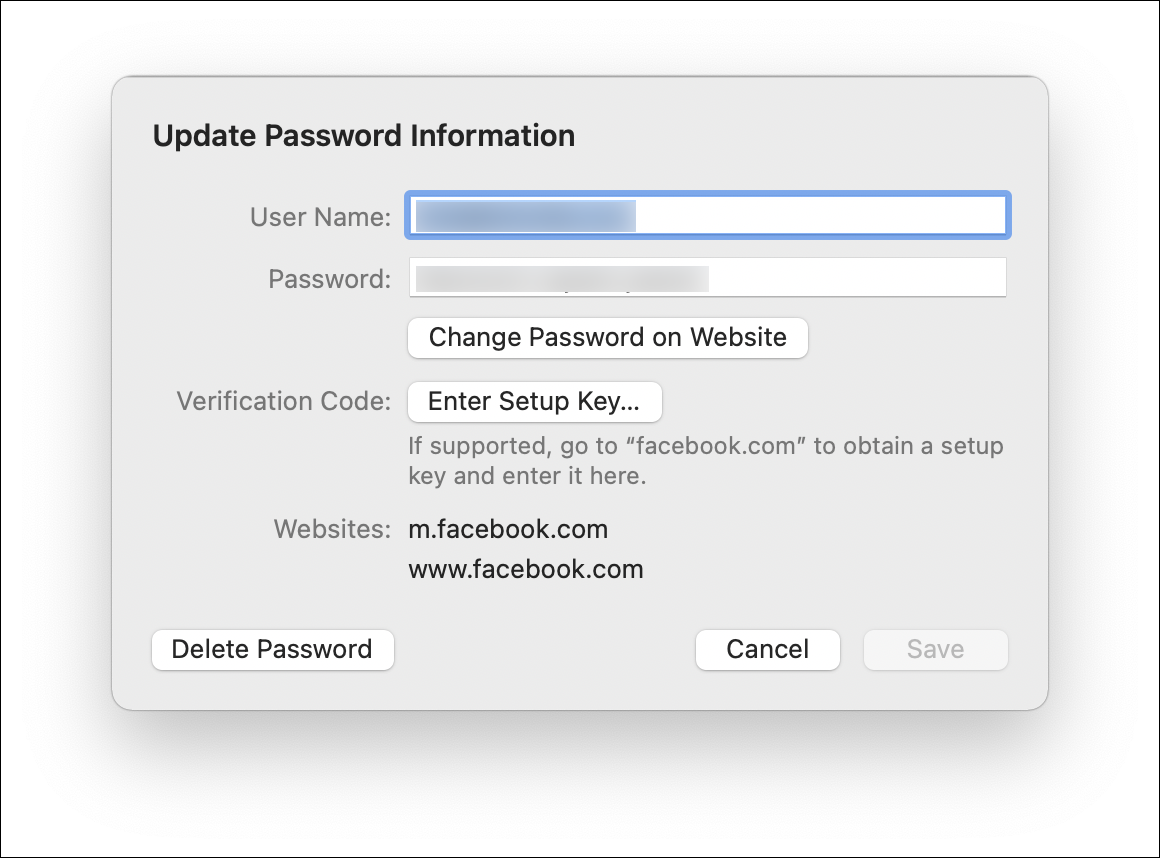
On Mac, click Enter Setup Central, or on iOS, tap Fix Verification Code.
Go to the website or service and find how to turn on two-gene hallmark; this is usually in the site'south Security settings. You'll generally get one or 2 options; an alphanumeric code and/or a QR code. If you're on an iOS device, yous have the option to scan a QR lawmaking, which you could do if you obtain the code on a computer which is in front of y'all. Otherwise, the easiest style is to just re-create the setup fundamental from the website and so paste it into the dialog.
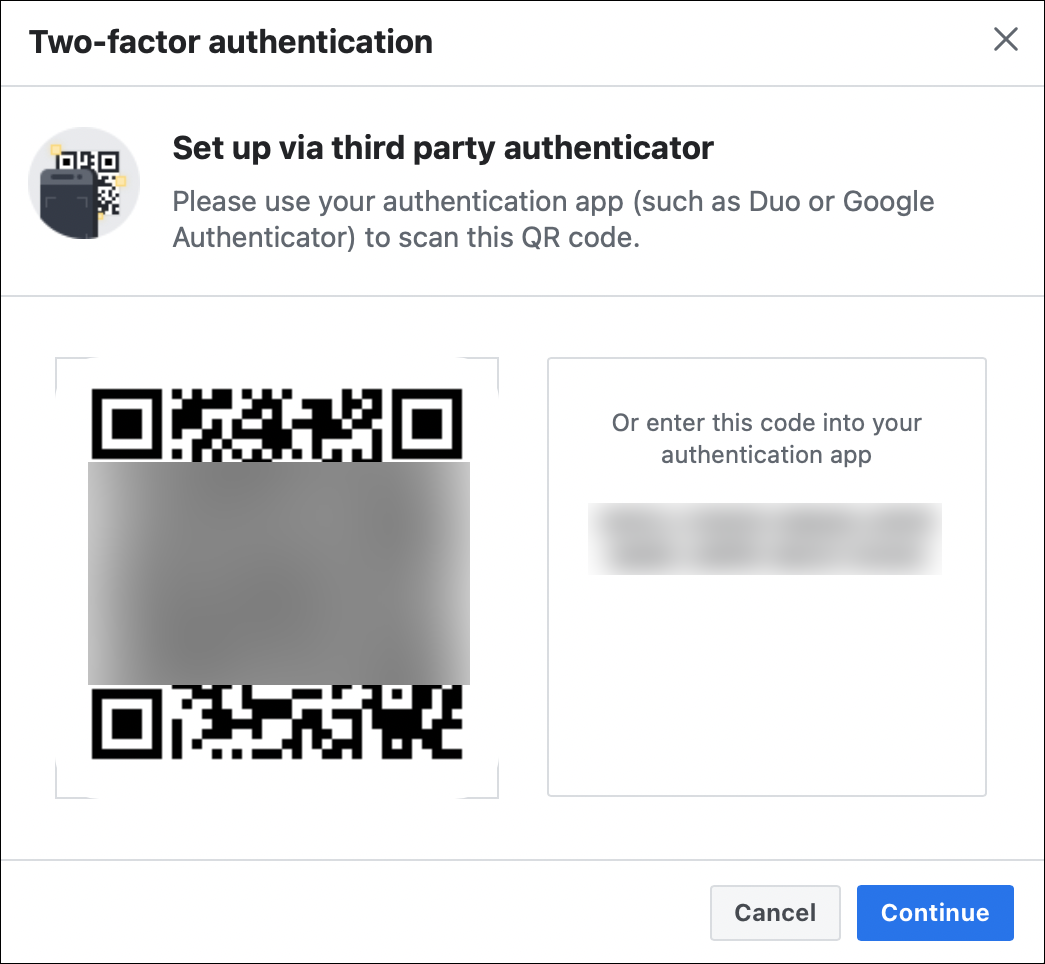
Click or tap OK, then the 2FA code will be saved. In the futurity, where you visit that website, your iCloud Keychain will enter your user proper name and password, and so, when a code is requested, information technology will auto-fill up that field with a code generated on the wing.
The macOS and iOS keychains are great tools that salve time and helps keep you lot secure. Since you don't need to recollect your passwords, you can brand them even more than secure, so be sure to use Apple's iCloud keychain to stay safe!
How tin I larn more?
See also our article on other pop password managers:
How to Choose the Right Password Manager for You
 Each week on the Intego Mac Podcast, Intego's Mac security experts talk over the latest Apple news, security and privacy stories, and offer practical advice on getting the most out of your Apple devices. Be sure to follow the podcast to make sure yous don't miss any episodes.
Nosotros discussed the iCloud keychain and more in episode 22 of the Intego Mac Podcast.
Yous can also subscribe to our e-mail newsletter and keep an eye hither on The Mac Security Blog for the latest Apple security and privacy news. And don't forget to follow Intego on your favorite social media channels: 




Virtually Kirk McElhearn
Kirk McElhearn writes about Apple products and more on his weblog Kirkville. He is co-host of the Intego Mac Podcast, as well as several other podcasts, and is a regular contributor to The Mac Security Blog, TidBITS, and several other websites and publications. Kirk has written more two dozen books, including Take Command books near Apple'southward media apps, Scrivener, and LaunchBar. Follow him on Twitter at @mcelhearn. View all posts by Kirk McElhearn →
How To Set Up Keychain On Mac,
Source: https://www.intego.com/mac-security-blog/mac-and-ios-keychain-tutorial-how-apples-icloud-keychain-works/
Posted by: murraywharand83.blogspot.com
0 Response to "How To Set Up Keychain On Mac"
Post a Comment